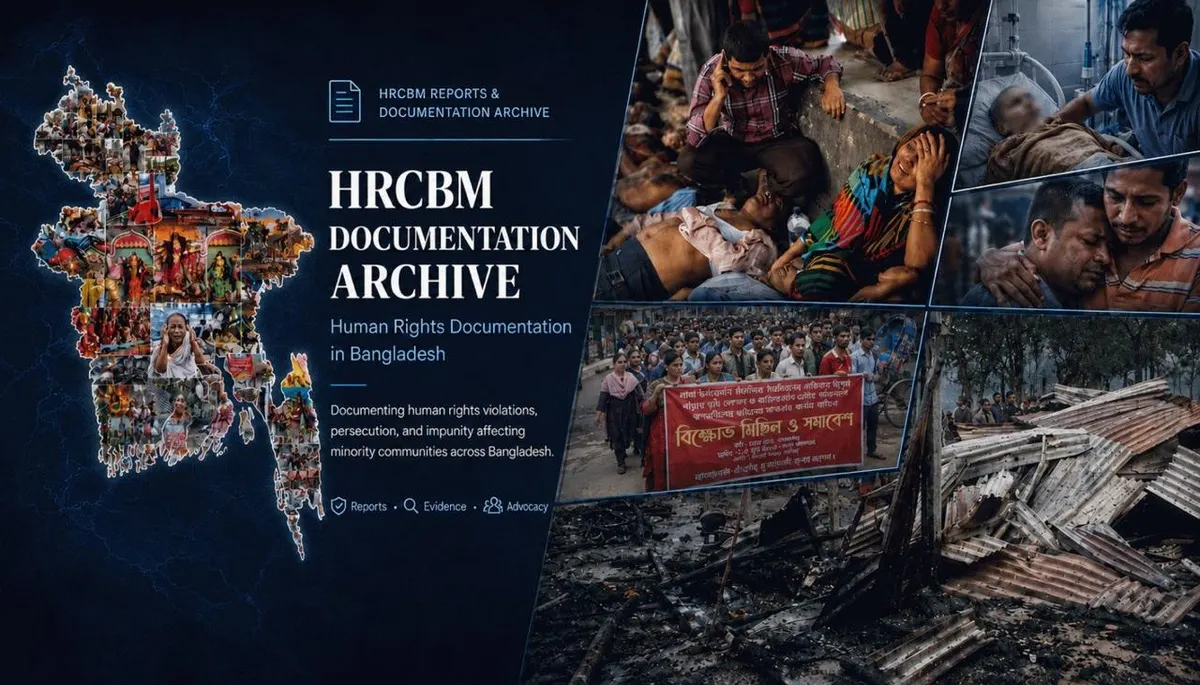
HRCBM documents 1,445 minority rights incidents across all 64 districts
[Desk Report] The Human Rights Congress for Bangladesh Minorities (HRCBM) signed by its President Dhiman Deb Chowdhury shared its ten-month national report. From January through October 2026, HRCBM documented 1,445 incidents affecting religious and ethnic minority communities across all 64 districts and all eight administrative divisions of Bangladesh.
The HRCBM calls for impartial investigations, effective protection, and equal access to justice.
The findings describe threats to personal safety, freedom of worship, homes and livelihoods. They also show what families face when they seek help, including delays or failures in registering complaints, intimidation of victims and witnesses, and pressure to abandon legal action.
What HRCBM documented:
• 408 incidents involving property attacks, land grabbing, arson or looting
• 407 incidents involving missing persons, kidnapping or physical assault
• 286 incidents classified as murder or mysterious death
• 251 incidents involving temple attacks or religious vandalism
• 63 incidents of sexual violence
• 30 blasphemy-related incidents across 14 districts
These figures represent documented minimums. Sexual violence is likely underreported because of stigma, fear of retaliation and barriers to seeking justice. Seven incidents are included in the national total whose district attribution was pending at the time of writing.
In Rangpur, the deaths of four members of the Ganapati Chakraborty family in August 2026 raised serious questions about the handling of the case. The HRCBM calls for independent scrutiny, preservation of evidence and an impartial investigation that establishes what happened and safeguards due process.
The report also documents cases in which allegations of hurting religious sentiment, including those involving disputed social media posts, were followed by threats or retaliatory attacks against minority families and communities. Authorities should protect people facing credible threats, preserve and examine disputed digital evidence, and investigate retaliatory violence promptly and impartially.
The HRCBM urges the Government of Bangladesh to register complaints promptly, investigate reported violations impartially, protect victims and witnesses, and ensure equal access to effective remedies. Bangladesh’s transitional justice efforts should explicitly address violations affecting religious and ethnic minorities and enable those communities to participate safely and meaningfully.
The HRCBM’s proposed Transitional Justice Framework includes draft terms of reference for an independent commission of inquiry.